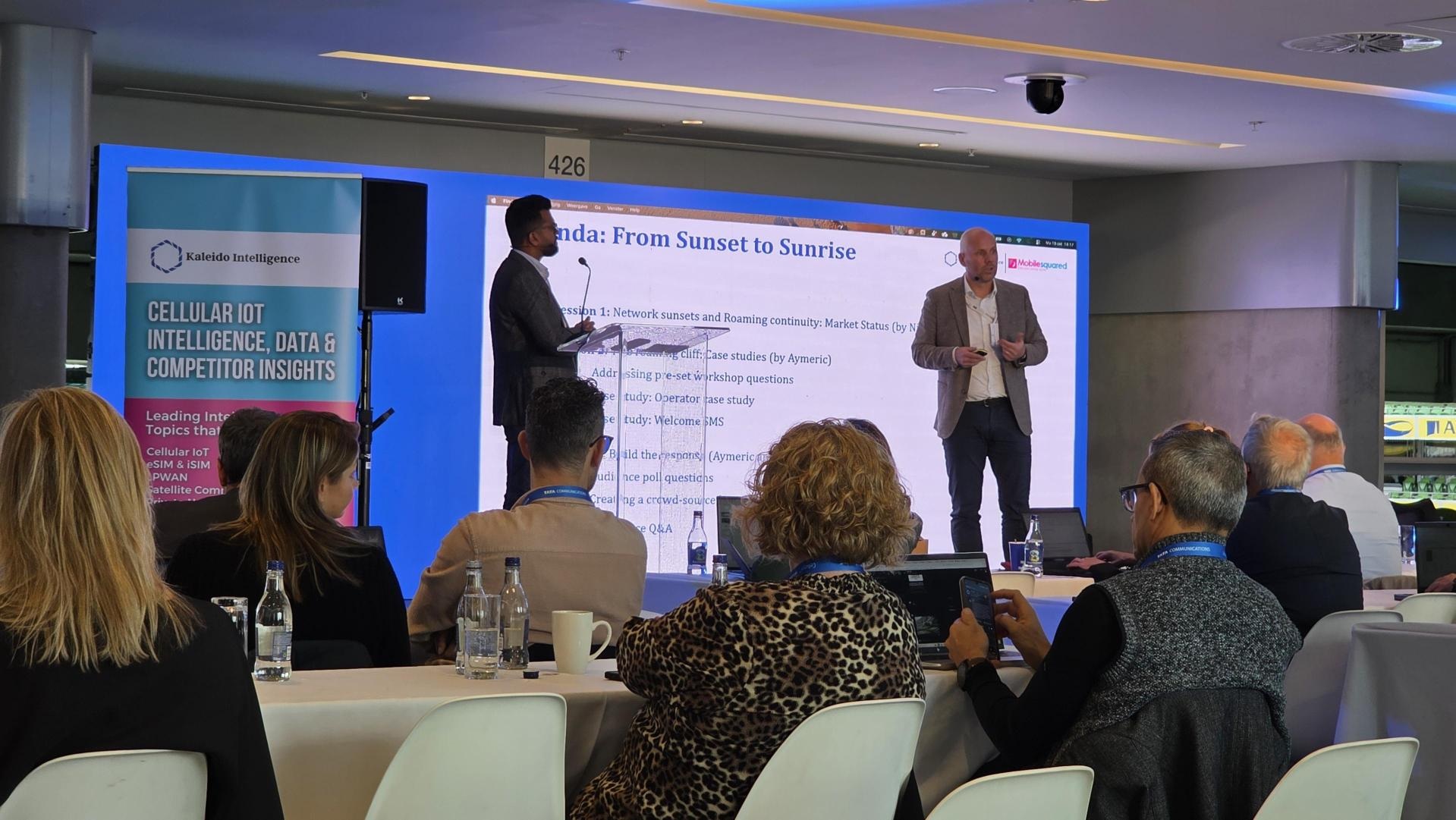
As GSMA WAS#24 day two ends in Dublin, the conversation around 5G Standalone (SA) roaming seems to be undergoing a shift. The industry is not just quoting distant timelines; they are increasingly finalizing active deployment plans.
While 5G Non-Standalone (NSA) roaming remains the established workhorse across more than 130 markets and 200 operators, 5G SA is rapidly building real-world momentum. Early movers have already demonstrated it can be activated rapidly. BICS launched what it cited as the world’s first live 5G SA roaming connection between Proximus and stc Kuwait as early as November 2022, while Comfone brought commercial 5G SA roaming live on a BroadForward SEPP in late 2025. By mid-2026, major global players like Jio and T-Mobile officially launched commercial SA roaming services, with at least 25 additional operators preparing for launches this year.
Despite this progress, SA roaming must still prove its financial and operational worth alongside legacy infrastructure. Here is a closer look at what we’re picking up what’s driving operators to commit, where the challenges lie, and how signaling core technology bridges the gap.
What Is Driving the Transition?
- Hosted SEPP Eliminates CapEx Barriers
Historically, building dedicated N32 edge infrastructure created a steep financial barrier to entry for many carriers. The emergence of hosted Security Edge Protection Proxy (SEPP) solutions changes that equation entirely. Operators can now leverage hosted and outsourced SEPP configurations provided over IPX networks—such as those from BICS and Comfone—to terminate N32 traffic without heavy upfront hardware investments. While direct SEPP-to-SEPP interconnections remain an option for larger carriers, the hosted model allows operators to launch faster and cheaper
- Built-In Security by Design
Unlike legacy signaling protocols that were retrofitted with security measures after deployment, 3GPP standards build mandatory protection directly into the 5G core. Mutual authentication between SEPPs, mandatory TLS encryption on N32 interfaces, and strict message-validation requirements significantly reduce vulnerability vectors. While policy misconfigurations or unmonitored links still carry operational risk, 5G SA creates a vastly stronger security baseline for cross-border traffic than previous cellular generations.
- The 2G/3G Sunset Forces the Shift
The ongoing phase-out of legacy 2G and 3G networks is quietly removing traditional fallback options for roaming voice traffic. While NSA roaming rides on the 4G LTE core to handle data, voice is transitioning from VoLTE to Voice over New Radio (VoNR). Delivering seamless VoNR to traveling subscribers strictly requires an underlying 5G SA roaming architecture. Operators seeking to protect their voice roaming revenues must have SA agreements live before legacy networks go dark.
- Interoperability Is Proven in the Field
Cross-network trials are moving from laboratory environments into live production. Beyond early milestones like the Proximus–stc Kuwait connection and AIS routing traffic through the BICS hub, multi-vendor testing—such as trials involving Vodafone Germany, Ericsson, and A1 Bulgaria—has proven that multi-region SA roaming is operationally feasible. Broad market rollout now rests on aligning security policies, interworking functions, and commercial settlement frameworks across international partners.
- Enterprise and IoT Offer Long-Term Upside
While consumer revenue boosts and specialized enterprise use cases—such as guaranteed service level agreements (SLAs) for global IoT or satellite Non-Terrestrial Network (NTN) integration—are promising, they remain secondary drivers for now. Analysts view these applications as valuable upside potential rather than the immediate catalyst for launching SA roaming.
Overcoming the Friction: Business and Technical Realities
The transition to 5G SA roaming is not without its hurdles. Over a third of operators currently holding off on SA launches report that they see no immediate business case for roaming-specific SA investments. Commercial models remain unsettled; in many instances, premium 5G SA subscribers are still billed and treated as standard data roamers when traveling abroad. Until wholesale pricing, settlement frameworks, and charging models catch up with core technical capabilities, SA roaming will primarily function as an operational capability rather than a direct new revenue stream.
Furthermore, 5G SA roaming does not instantly replace legacy ecosystems. Traveling subscribers will continue to cross onto networks that rely exclusively on 4G, 3G, or even 2G. As a result, global roaming will remain fundamentally multi-protocol for years to come—requiring seamless interaction between legacy MAP/SS7, Diameter, and modern HTTP/2 Service-Based Interfaces (SBI).
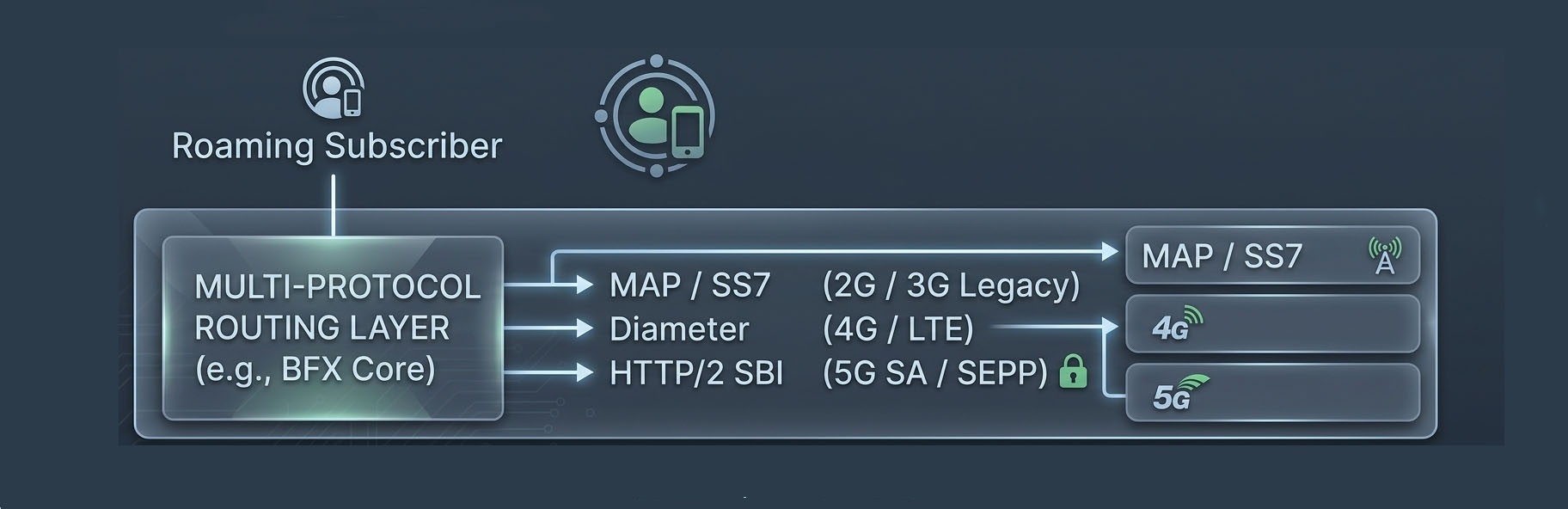
To maintain continuity, operators require a unified signaling core capable of routing and securing all three protocol generations. Production implementations—such as BICS utilizing the BroadForward SEPP on its BFX Unified Signaling Core (USC) platform, and Comfone running commercial SA roaming on the same BFX platform, and Wireless Logic integrating multi-protocol firewalls across group entities—demonstrate how unified signaling hubs keep legacy traffic flowing smoothly while enabling 5G SA capabilities.
The Strategic Takeaway
For network operators, the path forward is clear: launch 5G SA roaming strategically where hosted SEPP availability and key roaming partner readiness coincide. Prioritize hosted architecture terms that preserve end-to-end visibility and policy control, but do not decommission legacy protocol infrastructure prematurely. Maintaining a flexible, multi-protocol signaling core ensures your network delivers high-quality coverage for today’s roamers while building the foundation for tomorrow’s 5G Standalone future.