Operators Push Back Against Radical 6G Core Redesigns
The mobile industry is entering a new phase of 6G standardisation, but a growing debate is emerging around the future of the core network. According to a recent Light Reading analysis based on Omdia research, three competing 6G core architecture directions are now under discussion within 3GPP, creating concerns that the industry could fragment before a common global approach emerges. At the heart of the debate is how AI should be integrated into the network and what role long-established signaling mechanisms should play in future architectures. [lightreading.com]
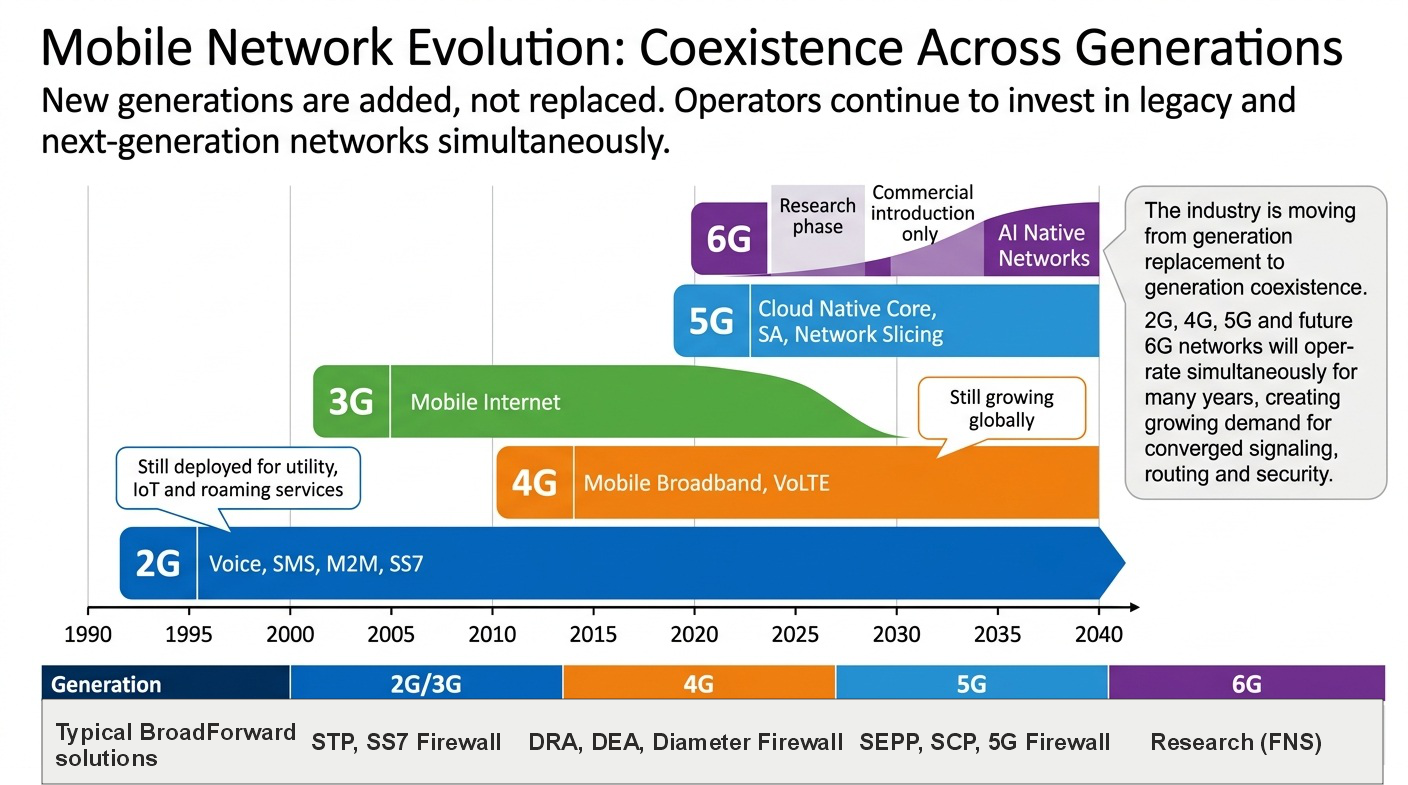
The discussion reflects a broader industry reality. Operators are still investing heavily in 5G Standalone deployments and are increasingly focused on upgrade paths, investment protection, and affordable evolution rather than disruptive “rip-and-replace” architectures. The article notes that 17 major operators jointly called for evolutionary migration paths, highlighting a clear preference for continuity over revolution.
A Familiar Story for Anyone Who Followed 5G
The concerns are reminiscent of the early years of 5G standardisation. Before the industry aligned on a common Service-Based Architecture, operators and vendors debated multiple architectural approaches, migration models, interfaces, deployment options, and cloud-native designs. While healthy competition ultimately strengthened the 5G standard, it also highlighted the risks of fragmentation, interoperability challenges, and delayed ecosystem maturity.
The latest 6G discussions show similar tensions emerging around AI integration, service execution, device intelligence, and the future of NAS signaling, the trusted signaling framework that has existed since 2G and remains fundamental to authentication, mobility management and security. Reworking these foundations would have implications reaching far beyond the core network, affecting devices, modems, security procedures and migration strategies.
Signaling Remains Central Across Every Generation
Regardless of which architectural direction ultimately prevails, one theme remains constant: signaling continues to sit at the centre of mobile network evolution. Every generation introduces new capabilities, but must also interwork with existing infrastructure, security frameworks and operational processes.
This is why BroadForward is actively engaged across 2G, 3G, 4G, 5G and already 6G research activities. In addition to supporting operators with STP, DRA, SEPP, SCP and security deployments today, BroadForward participates in the Dutch Future Network Services (FNS) programme, helping explore the architectures, signaling frameworks and interoperability requirements that will shape future networks.
Evolution Will Likely Win Over Revolution
The Light Reading analysis demonstrates that 6G is not merely about faster radio technology. The industry is already debating how much of today’s architecture should remain, what should evolve, and where AI should reside within the network.
If history is any guide, the eventual 6G standard will emerge through convergence rather than fragmentation. As happened during the transition to 5G, success will depend on balancing innovation with interoperability, protecting existing investments, and ensuring that new capabilities can coexist with previous generations. In that environment, signaling intelligence and multi-generation interoperability will remain essential building blocks of the mobile network.